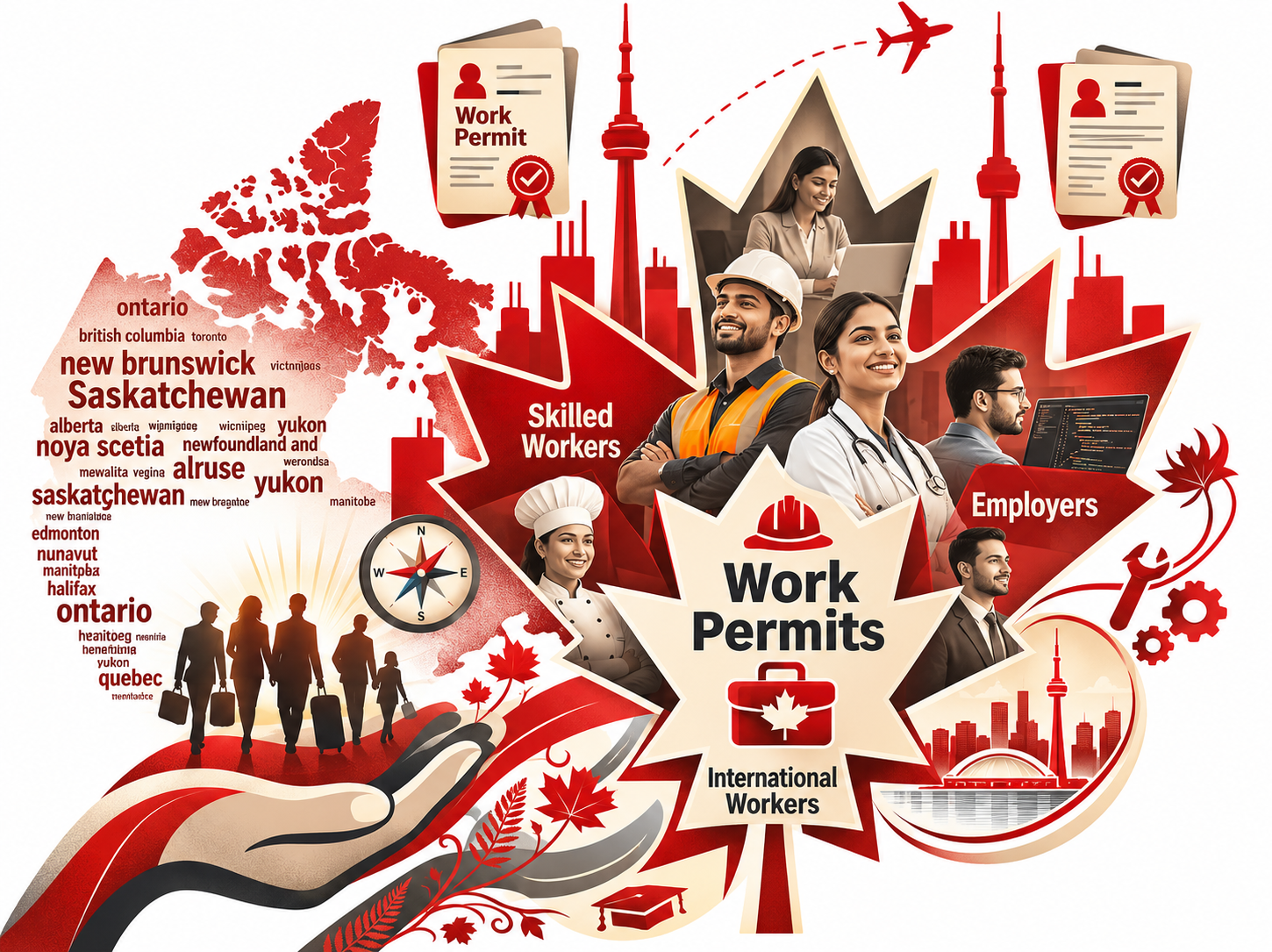
Post-Graduation Work Permit (PGWP) – Work in Canada After Graduation
Have you completed your studies at a Canadian college or university? A Post-Graduation Work Permit may allow you to gain valuable Canadian work experience after graduation. Understand the eligibility requirements, language criteria, field-of-study rules and application process before you apply.
Completing your education in Canada is an important milestone. For eligible international graduates, the Post-Graduation Work Permit (PGWP) can provide an opportunity to work in Canada and gain experience after finishing an eligible program. However, graduating from a Canadian institution does not automatically make you eligible. Your institution, specific program, study history, language results and application timing can all matter.
Eligibility Review
Review your institution, program, study history and applicable PGWP rules.
Language Requirements
Understand the required English or French proficiency level and accepted evidence.
Application Support
Prepare your documents and submit a complete application within the applicable deadline.
PGWP at a glance
- Application deadline: Generally within 180 days after receiving confirmation that you completed your program.
- Study program: Generally at least 8 months, or 900 hours for qualifying Quebec programs, at a PGWP-eligible institution.
- Language evidence: Generally required for applications submitted on or after November 1, 2024, subject to exemptions.
- Field of study: May apply to certain non-degree programs, depending on the applicable rules and study permit application date.
- Permit duration: Depends on the program, credential and passport validity.
Important: These are general rules, not a personal eligibility determination. Your study permit application date and program details can change which requirements apply.
1. What Is a Post-Graduation Work Permit (PGWP)?
A Post-Graduation Work Permit is an open work permit issued by Immigration, Refugees and Citizenship Canada (IRCC) to eligible international graduates of qualifying Canadian study programs.
An open work permit generally allows its holder to work for most employers in Canada without needing a job offer or a Labour Market Impact Assessment (LMIA) for that employment. Certain restrictions can apply, including conditions related to medical examinations and specific occupations.
Canadian work experience gained after graduation may help some individuals qualify for an economic immigration program, such as the Canadian Experience Class (CEC), if they meet all applicable requirements. A PGWP does not itself guarantee permanent residence.
2. Who Is Eligible for a PGWP?
To qualify, you must meet the general eligibility requirements and any additional requirements that apply to your program, credential and study permit application date.
General eligibility considerations
- You completed an eligible program at a designated learning institution (DLI) that offers PGWP-eligible programs.
- Your program was generally at least 8 months long, or 900 hours for qualifying Quebec programs.
- You maintained full-time student status during each academic semester, except that part-time study may be permitted in your final semester.
- You apply within 180 days after your institution confirms that you completed your program.
- Your study permit was valid at some point during the 180 days after you completed your program, subject to applicable rules and exceptions.
- You have not previously received a PGWP.
Who may not qualify?
Some examples of situations that can make a graduate ineligible include:
- Completing a program at a school or program that is not PGWP-eligible.
- Studying English or French as a second language only.
- Completing a general-interest or self-improvement course, or a non-credit program that does not qualify.
- Having already received a PGWP after an earlier program.
- Completing more than 50% of the program through distance learning, subject to specific exceptions.
- Not meeting the applicable full-time study or other program requirements.
There are special rules and exceptions for certain graduates and study arrangements. Each case should be reviewed individually.
3. Eligible Institution and Program Requirements
One of the most important steps is confirming that your exact program is eligible for a PGWP. Being enrolled at a designated learning institution does not automatically mean that every program offered by that institution qualifies.
Before applying, review:
- The institution's DLI status.
- Whether the specific program is PGWP-eligible.
- The credential awarded upon completion.
- The program's duration and delivery format.
- The applicable field-of-study rules, if any.
- The date you submitted your study permit application.
Where applicable, confirm the program's six-digit Classification of Instructional Programs (CIP) code with your institution. The program title alone may not be enough to establish whether the field-of-study requirement is met.
4. PGWP Language Requirements
For most applicants who submit a PGWP application on or after November 1, 2024, IRCC requires proof of English or French language ability. The required level depends on the credential completed.
| Credential completed | Minimum language level |
|---|---|
| Bachelor's, master's or doctoral degree from a university | CLB 7 in English or NCLC 7 in French in all four abilities |
| Other university programs | CLB 7 in English or NCLC 7 in French in all four abilities |
| College or other non-university programs | CLB 5 in English or NCLC 5 in French in all four abilities |
The language test must be an IRCC-accepted test for PGWP purposes and must meet the validity requirements at the time of application. Results are assessed separately for reading, writing, listening and speaking.
Accepted language tests
- CELPIP-General
- IELTS General Training
- PTE Core
- TEF Canada
- TCF Canada
5. PGWP Field-of-Study Requirements
Some graduates of college and other non-university programs must complete an eligible field of study to qualify for a PGWP. The requirement is linked to specified areas of labour-market need and is assessed using the program's CIP code.
Who may be exempt from the field-of-study requirement?
IRCC identifies exemptions that include certain applicants who:
- Submitted their study permit application before November 1, 2024.
- Graduated with a bachelor's, master's or doctoral degree.
- Graduated from a PGWP-eligible flight school.
- Fall within another specific IRCC exemption.
How to check your field of study
- Ask your institution for the six-digit CIP code for your program.
- Check the current IRCC eligible field-of-study list.
- Review the rules applicable to the date you submitted your study permit application.
- Confirm whether the program meets the applicable requirement when you submit your PGWP application.
6. How Long Is a PGWP Valid?
The duration of a PGWP depends on the length and type of study program, the credential earned and the validity of your passport.
| Study program | Potential PGWP duration |
|---|---|
| Eligible program of at least 8 months but less than 2 years | Generally up to the same length as the program |
| Eligible program of 2 years or longer | Up to 3 years |
| Eligible master's degree of at least 8 months | May qualify for up to 3 years, even if the program is less than 2 years |
| More than one eligible program | Combined duration may be possible if each program meets the applicable requirements |
These are general duration rules. The actual permit may be shorter if your passport expires earlier. You cannot receive another PGWP simply because you complete another program after already receiving one.
7. When Should You Apply for a PGWP?
In general, you must apply within 180 days after your institution confirms that you have completed your program. The date of completion is important and may be established through a completion letter, transcript or other official confirmation from your institution.
What if your study permit expires?
If your study permit expires before you submit your PGWP application, your options and ability to remain in Canada depend on the timing and your immigration status. In certain circumstances, you may be able to apply for a PGWP and restore your status within 90 days after losing student status. You generally cannot work until the PGWP is approved in that situation.
If your study permit is still valid when you apply, and you meet IRCC's other conditions, you may be authorized to work full-time while your PGWP application is being processed.
8. Documents Required for a PGWP Application
Your document checklist depends on your education, application history and individual circumstances. Common documents include:
- Valid passport and relevant passport pages.
- Current or previous study permit, as applicable.
- Official completion letter from the institution.
- Final transcript or official academic record.
- Degree, diploma or certificate, if available.
- Proof of full-time enrolment or study history, if required.
- Accepted English or French language test results, where applicable.
- Proof of eligible field of study or CIP code, where applicable.
- Medical examination evidence, if required for the intended employment or permit conditions.
- Any additional documents requested by IRCC.
IRCC may request further information or supporting documents after submission. Documents should be clear, consistent and accurate.
9. PGWP Application Process
A well-prepared application begins with confirming eligibility, not simply uploading documents. A practical application process includes the following steps:
10. Can You Work While Your PGWP Application Is Being Processed?
Some graduates may work full-time while waiting for a decision on their PGWP application. This is not automatic for every applicant.
Generally, you may be authorized to work while your application is being processed if:
- You held a valid study permit when you submitted your PGWP application.
- You completed your program of study.
- You were eligible to work off campus during your studies without a work permit.
- You did not work more hours than permitted during your studies.
If your study permit expired before you applied, or you applied after losing student status and are restoring your status, different rules apply. You generally cannot work until your PGWP is approved in that situation.
11. Common PGWP Application Mistakes
Assuming every DLI program qualifies
Institution status and program eligibility are separate considerations.
Ignoring language requirements
Applicants may overlook the minimum level required for their credential.
Not checking the CIP code
Some non-degree programs are subject to field-of-study requirements.
Missing the 180-day deadline
Waiting too long can affect eligibility and immigration status.
Overlooking passport expiry
A short passport validity period can limit the duration of the permit issued.
Working without authorization
Work authorization while an application is pending depends on specific conditions.
12. Frequently Asked Questions About PGWP
Can every international student in Canada apply for a PGWP?
No. You must graduate from a qualifying program at a PGWP-eligible institution and meet the applicable general, language, field-of-study and other requirements.
How long do I have to apply after graduation?
Generally, you have 180 days after receiving confirmation that you completed your program. Your study permit and immigration status during this period are also important.
Do I need IELTS for a PGWP?
Most applicants who apply on or after November 1, 2024, must provide accepted English or French language test results, subject to exemptions. IELTS General Training is one accepted option, but other approved tests may also be used.
What is the minimum IELTS score for a PGWP?
The requirement is expressed in Canadian Language Benchmark (CLB) levels, not as one overall IELTS score. University graduates generally need CLB 7 in each ability, while college and other non-university graduates generally need CLB 5 in each ability. The corresponding individual test scores must be checked.
Is a field-of-study requirement applicable to all PGWP applicants?
No. It generally applies to certain non-degree programs, subject to exemptions and the date of the study permit application. Bachelor's, master's and doctoral degree graduates are among those exempt from this requirement.
Can I get a three-year PGWP after a one-year master's degree?
An eligible master's degree program of at least eight months may qualify for a PGWP of up to three years, even if the program is shorter than two years. All other applicable requirements must also be met.
Can I work full-time after completing my studies?
You may be able to work full-time while your PGWP is being processed if you meet IRCC's specific conditions, including having a valid study permit when you applied. If you applied after your study permit expired, you generally cannot work until approval.
Can I apply for permanent residence after receiving a PGWP?
A PGWP may allow you to gain Canadian work experience that could help you qualify for an immigration program such as the Canadian Experience Class. You must still meet the separate requirements of the permanent residence program.
Can I apply for another PGWP after completing a second program?
Generally, you cannot receive a second PGWP if you have already been issued one after completing an earlier program of study.
What happens if my passport expires before my PGWP's full possible duration?
IRCC may issue a shorter permit based on your passport expiry. In certain circumstances, you may apply on paper to extend the permit after obtaining a new passport, but only for the remaining period of your original eligibility.
13. How CTIV Can Help With Your PGWP Application
Preparing a PGWP application requires more than completing an online form. The applicable rules may depend on your program, credential, study permit application date, language results and immigration status.
CTIV can assist eligible graduates with reviewing their circumstances, identifying applicable requirements and organizing their application documentation.
Eligibility Assessment
Review your institution, program, credential and study history against the applicable requirements.
Document Preparation
Help organize completion documents, language results and supporting evidence.
Application Review
Review application information and supporting documents for completeness and consistency before submission.
Whether you have just completed your college diploma, bachelor's degree, postgraduate program or master's degree, an early review can help you understand your next steps.
Completed Your Studies in Canada? Let's Review Your PGWP Options.
Do not leave your post-graduation work permit application until the last minute. Speak with CTIV about your eligibility, documentation and application process.
Licensed RCICs · Greater Toronto · Canada-wide